
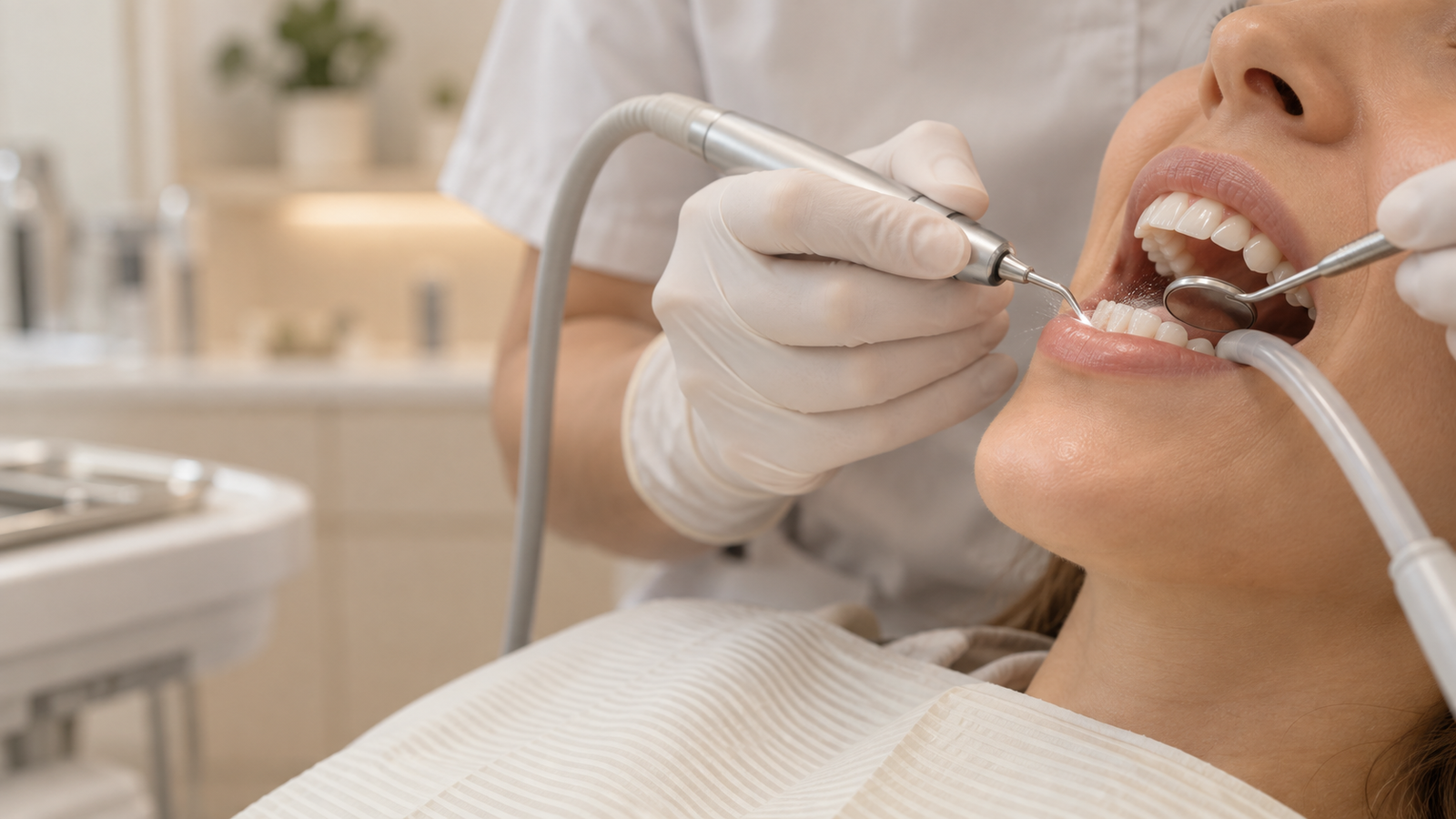
Prevention / professional dental cleaning

Professional
dental cleaning.

Professional removal of calculus, plaque and staining, followed by polishing and personalised oral-hygiene coaching. The visit is tailored to the condition of your teeth and gums.

Scaling and airflow cleaningPersonalised hygiene coaching
Professional dental cleaning and scaling
01
Accurate diagnosticsDecisions based on the big picture.
02
Individual planA method tailored to the malocclusion and the patient.
03
Specialized careThe stages of therapy are clearly explained.
04
Stable resultTreatment ended with retention.

A tailored procedure, not one routine for everyone

Even with careful brushing, calculus may build up at the gum line, stains may appear after coffee or tea, and the gums may bleed during cleaning. This does not necessarily mean neglect. Plaque also collects in difficult areas and, once mineralised, cannot be safely removed with a toothbrush at home.

Professional dental cleaning removes soft plaque, hardened calculus and superficial staining. Its value is not merely cosmetic: removing deposits can help reduce gum irritation and bleeding, unpleasant breath and areas that encourage further plaque retention. Afterwards, the teeth feel clean and smooth, and you receive practical advice on maintaining the result.

Depending on your needs, the visit may include an oral assessment, scaling, airflow cleaning, polishing, fluoride when indicated and personalised hygiene coaching. We first assess calculus, staining, gum health, sensitivity and plaque-retentive areas, including braces, retainers, crowns or implants.

The stages are selected individually. Professional cleaning does not replace a dental examination or treatment for caries or periodontal disease. If we identify a concern that requires further diagnostics, we clearly explain the appropriate next step.

What can a complete hygiene visit include?

01 / ASSESSMENT

Oral-health assessment

We discuss hygiene and sensitivity, examine the teeth and gums, and identify calculus, staining and plaque-retentive areas.

02 / SCALING

Calculus removal

Scaling removes hard, mineralised deposits. Instruments and intensity are adapted to the amount of calculus, comfort and clinical situation.

03 / AIRFLOW

Plaque and stain removal

Air polishing helps remove soft plaque and external stains from coffee, tea, tobacco and coloured foods. Powder and technique are selected for the teeth, gums and restorations.

04 / POLISHING

Smoothing tooth surfaces

After cleaning, accessible surfaces are polished so they feel smooth and are easier to maintain at home.

05 / PROTECTION

Fluoride when indicated

A fluoride preparation may be advised for caries risk, sensitivity or enamel needs. The decision and aftercare instructions are individual.

06 / COACHING

Hygiene tailored to your mouth

We demonstrate brushing and interdental cleaning and select suitable aids for braces, retainers, implants, crowding and other difficult areas.

What happens during the visit?

01 / Conversation and assessment

We identify your needs, examine the tissues and agree a safe scope.

02 / Professional cleaning

Calculus, plaque and staining are removed step by step with attention to comfort.

03 / Finishing and protection

The teeth are polished; fluoride is used only when indicated.

04 / A home-care plan

You leave with clear, practical guidance on what to use and which areas need extra attention.

After professional cleaning

Temporary sensitivity or mild gum tenderness may occur, especially after heavier calculus removal. Severe or increasing pain should be discussed with the clinic.

Eating and drinking advice depends on the procedure and any fluoride product used. We do not prescribe the same “white diet” automatically to everyone.

Cleaning removes stains and restores the natural surface colour; it does not change the intrinsic tooth shade like whitening.

Recall frequency is individual and depends on calculus formation, gum health, home care, smoking, orthodontic appliances, implants and oral-disease risk.

Read our guide to the white diet after teeth whitening →

Common questions about professional dental cleaning

These answers help you prepare, but the scope is always agreed after an oral assessment.

Does professional cleaning hurt?

Most patients tolerate it well, but sensitivity, inflamed gums and the amount of calculus can affect comfort. Tell us about sensitive areas so the pace and technique can be adjusted.

Are scaling and airflow cleaning the same?

No. Scaling removes hard mineralised calculus, while airflow cleaning mainly removes soft plaque and external staining. They often complement each other.

Will my teeth become whiter?

They may look cleaner and brighter after external stains are removed, but this is not bleaching and does not change the intrinsic enamel colour.

How often should I have it done?

There is no single interval for everyone. We recommend a recall based on gum health, calculus build-up, caries risk and home care.

Can it be done with braces?

Yes. Professional cleaning can be especially useful around brackets and wires, but it does not replace thorough daily care or dental check-ups.

Is gum bleeding a contraindication?

Bleeding often signals inflammation and should be assessed, not ignored. If periodontal diagnostics or treatment are needed, routine cleaning is not a substitute.

Is hygiene coaching really necessary?

Yes. We show techniques and select tools for your anatomy, braces, retainers or implants rather than giving a generic product list.

Clean teeth.
Better everyday control.

Book professional cleaning and receive advice tailored to your teeth, gums and dental appliances.

Book a visit