Teeth whitening · hygiene · aftercare
The white diet after teeth whitening — what can you eat?
Many patients have heard that they should eat only pale foods after whitening. Current clinical evidence does not show that a strict white diet is required for whitening to work. This guide explains what the term means, when brief caution may be reasonable and how to care for sensitive teeth without unnecessary restrictions.
 ortosmilesilesia.pl
What is a white diet?
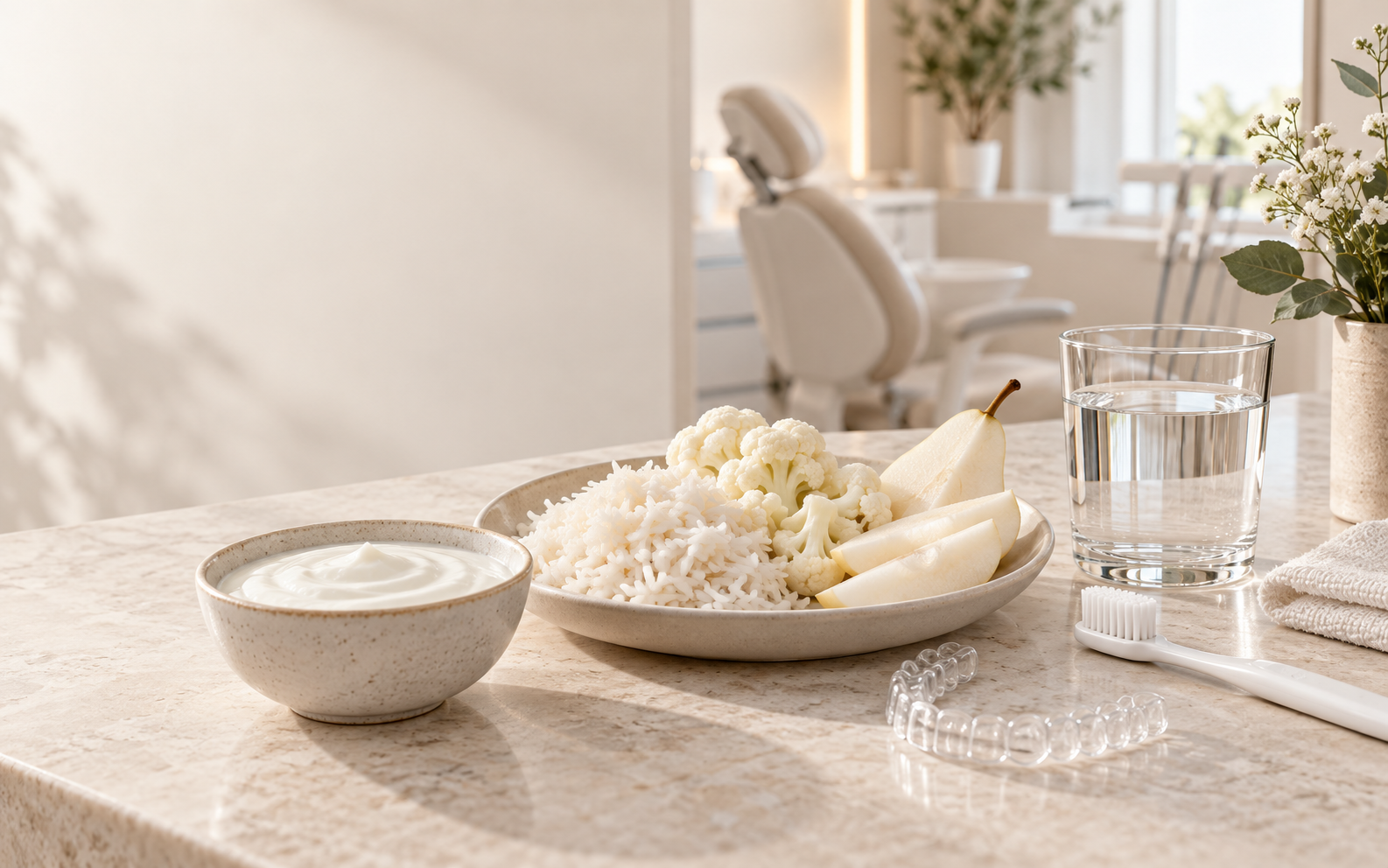
A white diet favours pale, minimally staining foods such as water, rice, natural dairy, eggs, fish, poultry, cauliflower and peeled pears. Coffee, tea, red wine, cola, beetroot, berries, turmeric and dark sauces are commonly limited.
It is sometimes recommended for 24–48 hours after in-office whitening or during a tray-whitening programme. It is not a treatment in itself and should not become a nutritionally poor elimination diet. Advice should match the whitening method, oral health and sensitivity.
Is a white diet really necessary?
Systematic reviews published in 2024 and 2025 found no meaningful difference in whitening colour change between restricted diets and unrestricted diets or exposure to pigmented drinks. This challenges the traditional belief that one coloured meal ruins the result.
Long-term habits still matter. Coffee, tea, red wine and smoking contribute to external staining over time, and one clinical trial suggested frequent coffee exposure after treatment may affect lightness. The balanced message is therefore not “anything goes”, but that strict fear-based rules are unsupported while moderation and hygiene remain sensible.
What the evidence supports:
- no need to eat only white foods
- one coloured drink is unlikely to undo treatment
- repeated staining habits can contribute to deposits over time
- individual instructions take priority over generic online lists
How long should dietary caution last?
There is no universal duration. Some in-office protocols advise avoiding strongly staining foods for the first day or two; tray-whitening instructions may apply on treatment days. The correct timeframe comes from the actual product and clinical plan.
Ask when coffee can be resumed, whether restrictions apply throughout the course and what to do if sensitivity develops. Advice from the clinician who examined your teeth is more relevant than a standard internet timetable.
- 01
Identify the method
In-office and tray whitening use different protocols.
- 02
Read your instructions
Written aftercare is more useful than a random food list.
- 03
Monitor sensitivity
Temperature and acidity may matter more than colour.
- 04
Ask if unsure
A quick question is safer than extending restrictions yourself.
What can you eat and drink?
If you prefer to be cautious for a short period, choose mild, pale and relatively non-acidic foods. They do not have to be perfectly white. A practical rule is to limit intense pigments, acidic drinks and extreme temperatures while the teeth are tender.
Normal meals can include rice or pale pasta, fish or poultry, cauliflower, peeled courgette, yoghurt, porridge or eggs. Water is the simplest drink. The diet should remain balanced and realistic.
Usually practical choices:
- water, milk and plain yoghurt
- rice, potatoes, pale pasta and bread
- eggs, fish, poultry and mild cheese
- cauliflower, peeled cucumber or courgette, banana and peeled pear
Items to use with moderation:
- coffee, tea, red wine and cola
- beetroot, berries and dark juices
- turmeric, curry, tomato and soy sauces
- tobacco products that promote staining
Do you have to give up coffee?
One coffee does not cancel an entire whitening course. Follow any time-specific instruction from the clinic. Later, frequency, contact time and hygiene matter more than panic over a single cup. Sipping coffee for hours prolongs pigment contact.
Rinse with water afterwards. Avoid aggressive immediate brushing after acidic drinks. A straw is not complete protection. A realistic plan that a patient can follow is more useful than an absolute ban.
Is the advice the same after professional cleaning?
Professional scaling, air polishing and polishing remove calculus and external deposits; they do not chemically bleach enamel. A strict white diet is usually unnecessary after cleaning alone. Specific waiting times may apply if fluoride varnish or another protective material was used.
Confirm exactly what procedure was performed. Improving daily plaque control and arranging appropriate reviews is more important than a prolonged elimination diet.
How should you care for sensitive teeth after whitening?
Temporary sensitivity and mild gum irritation are common adverse effects. Very cold, hot, acidic or sweet foods may be more uncomfortable than pigmented foods. Brush gently with a soft brush and use only products recommended for your treatment. Never increase gel volume or contact time yourself.
If you consume a staining food, rinse with water and return to normal hygiene. Severe or localised pain, worsening sensitivity or visible gum injury should be discussed with the clinic.
Common questions about the white diet and teeth whitening
Is a white diet mandatory after whitening?
Current reviews do not show that strict dietary restriction is required for good whitening results. Protocols still differ, and oral health, the product used and sensitivity may alter the instructions. Follow the advice given after your examination. Brief caution is not the same as a long restrictive diet.
How long should I avoid coffee?
There is no single evidence-based number for every method. Some clinics recommend 24–48 hours, while others do not require strict avoidance. Follow the protocol you received. When you resume coffee, avoid sipping it for hours and rinse with water afterwards.
What if I drink coffee immediately after treatment?
Do not assume the treatment has failed. Rinse with water and continue the agreed plan. Do not brush aggressively or add extra whitening gel. Contact the clinic if you are unsure, but one event rarely means the whole procedure must be repeated.
Is a white diet needed after air polishing?
Usually not after scaling, air polishing and polishing alone. Different instructions may apply after fluoride varnish or another protective product. Ask what was used and how long to wait before eating. Temperature may matter if the teeth are temporarily sensitive.
Can whitening cause sensitivity?
Yes. Temporary sensitivity is common and usually settles. Do not increase gel concentration, volume or wearing time. Use desensitising products only as advised. Strong, localised or persistent pain requires a dental review.
Should cleaning be done before whitening?
The order depends on the examination. Calculus and deposits can make shade assessment and planning less reliable, so cleaning is often performed first. Cavities, leaking restorations and gum inflammation also need assessment. The plan should reflect clinical need rather than an automatic package.
- Systematic review and network meta-analysis — white diet during dental bleaching (PubMed)
- Systematic review and meta-analysis — is a white diet necessary? (PubMed)
- American Dental Association — Whitening
- NHS — Teeth whitening, safety and side effects
- Randomized clinical trial — stain-causing beverages after bleaching (PubMed)