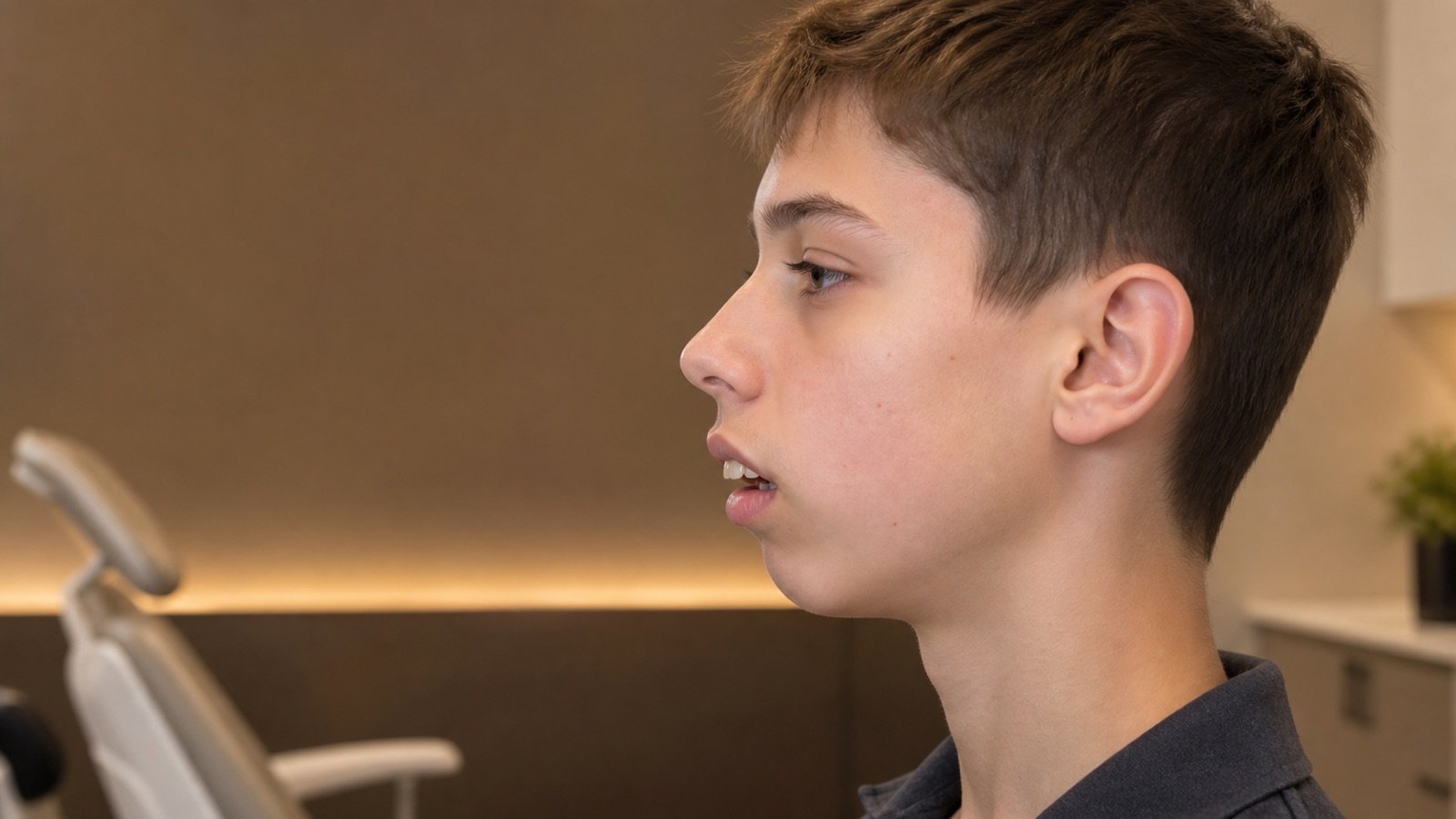
01 / INTRODUCTIONUnderbite – what is worth knowing?
An overbite describes an incorrect arch relationship in which the lower dental arch remains retracted relative to the upper one. The image may be due to the alignment of the teeth, the structure of the jaws, or both.
Orthodontic evaluation does not end with naming the malocclusion. The same visible problem may have different causes in a growing child, a teenager and an adult. Therefore, the plan covers tooth alignment, jaw relationship, function, periodontal health, and the impact of treatment on the profile and smile.
Overbite is a common malocclusion, but one name may cover very different tooth and jaw relationships. In one patient, the dominant symptom is the retraction of the mandible, in another, the protrusion of the upper incisors, and sometimes both elements occur simultaneously. Therefore, assessing the profile, height and position of the teeth is more important than choosing a specific appliance. In children and adolescents, the timing of treatment initiation may allow growth potential to be exploited. In adults, the limits of orthodontic correction must be clearly assessed. Diagnostics of the overbite in our office in Chorzów, near Katowice, leads to a plan that takes into account the function, profile, stability and real expectations of the patient.
02 / SIGNALSWhat might attract attention?
- big difference between the position of the upper and lower incisors
- receding chin or convex profile
- deep overbite coexisting with underbite
- difficulty in closing the lips freely
The list helps you recognize the signals, but is not intended for self-diagnosis. Some problems are only visible during a bite examination or an X-ray.
03 / SUBSTRATEWhy might the problem occur?
- receding position or weaker growth of the mandible
- protrusion of the jaw or upper teeth
- family conditions and individual growth pattern
- persistent abnormal functions and habits
Most often, several factors act at the same time. Recognizing the cause helps assess the stability of the planned effect and the possible need for cooperation with other specialists.
04 / DIAGNOSTICSWhat does the orthodontist analyze?
The visit begins with a conversation about health, previous treatment and expectations. The face, profile, smile, tooth alignment, occlusal contacts and function are then assessed. The scope of photographs, scans and radiological tests is selected individually.
Teeth relationship
Location of crowns and roots, amount of space and contacts between arches.
Jaw relationship
Proportions, symmetry and possible contribution of growth to the malocclusion.
Biological conditions
The condition of enamel, gums, bones and other structures important for safety.
What might a treatment plan look like?
- cephalometric analysis of the relationship of the maxilla and mandible
- assessment of a child or teenager's growth potential
- determining whether dental correction, growth correction or team treatment is possible
- control of profile, bite and lateral contacts
Fixed braces, aligners, removable braces or team treatment are not an end in themselves. These are tools selected for recognition. The final scope, time, costs and possible alternatives can only be determined once the diagnostics are completed.
06 / THE MOMENT OF TREATMENTWhen is it worth coming for a consultation?
In growth-related malocclusions, the time to start therapy is particularly important. In adults, the possibilities of orthodontic camouflage should be clearly distinguished from situations requiring surgical consultation.
It is also worth making an appointment if the change progresses, makes hygiene or biting difficult, causes tissue injuries or raises concerns about the development of the child's bite.
ImportantThe content is educational in nature and does not replace an individual examination or medical diagnosis.