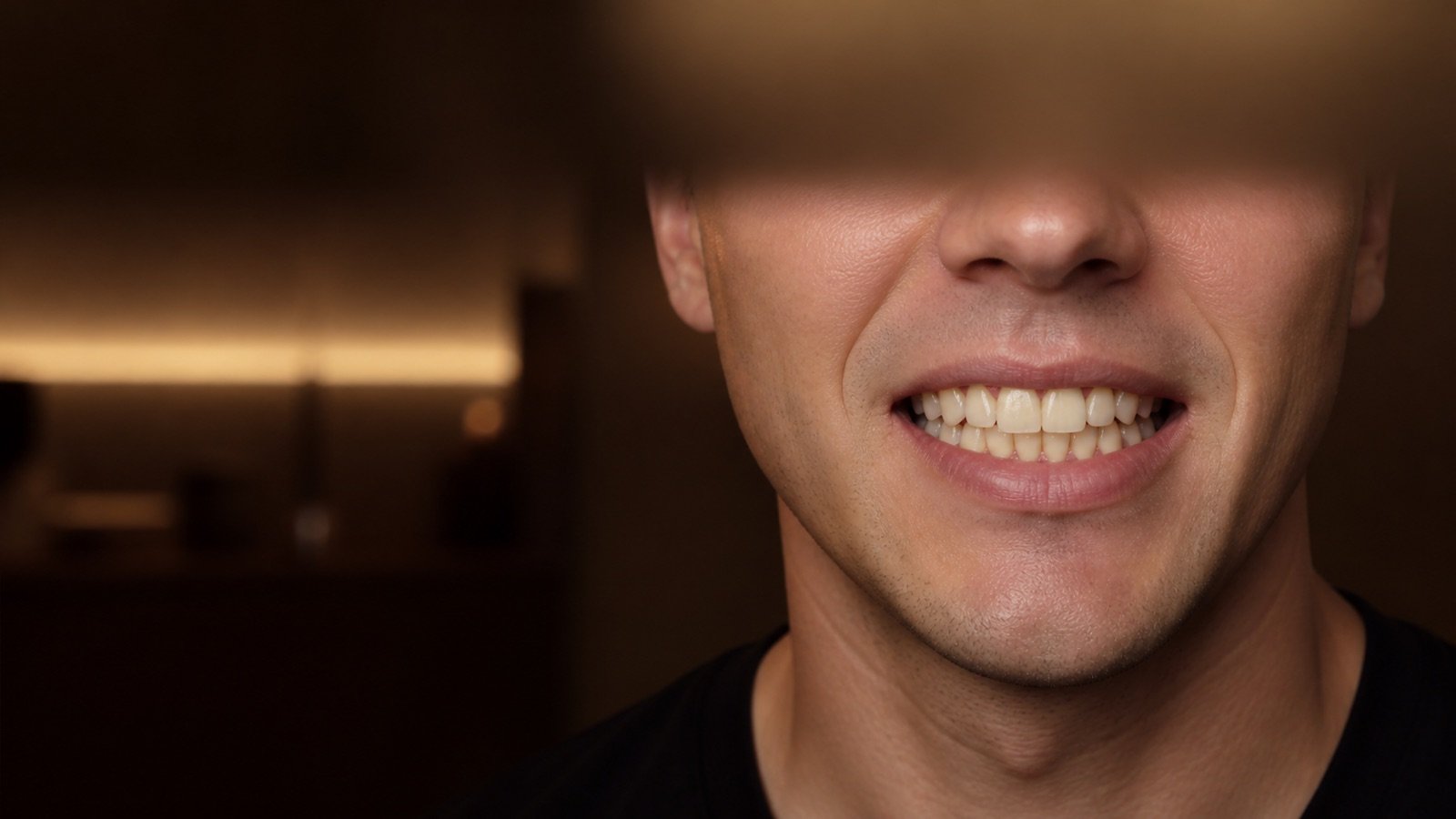
01 / INTRODUCTIONBite and smile asymmetry – what is worth knowing?
Asymmetry may involve midlines, tooth position, arch width, smile height or jaw structure. A slight asymmetry is natural; the problem identified in the examination requires treatment.
Orthodontic evaluation does not end with naming the malocclusion. The same visible problem may have different causes in a growing child, a teenager and an adult. Therefore, the plan covers tooth alignment, jaw relationship, function, periodontal health, and the impact of treatment on the profile and smile.
Bite and smile asymmetry may be subtle or clearly visible as a shift in the midline, different tooth exposure or the jaw moving to one side. Small differences between the sides of the face are natural, so the goal of diagnostics is not artificial idealization, but to determine whether the asymmetry has functional significance and whether it is progressing. The orthodontist analyzes photographs in rest and smiling, the path of jaw movement, tooth contacts and the structure of the jaws. In our office in Chorzów, near Katowice, we separate dental asymmetry from functional and skeletal asymmetry to present the patient with the actual scope of possible correction and the need for possible specialist cooperation.
02 / SIGNALSWhat might attract attention?
- mismatched midlines of the upper and lower arches
- the mandible moves sideways when closing
- uneven course of the bite or smile plane
- different exposure of teeth on the right and left side
The list helps you recognize the signals, but is not intended for self-diagnosis. Some problems are only visible during a bite examination or an X-ray.
03 / SUBSTRATEWhy might the problem occur?
- unilateral crossbite and jaw displacement
- uneven tooth loss or tooth migration
- asymmetric jaw development
- trauma, impaired eruption or differences in muscle function
Most often, several factors act at the same time. Recognizing the cause helps assess the stability of the planned effect and the possible need for cooperation with other specialists.
04 / DIAGNOSTICSWhat does the orthodontist analyze?
The visit begins with a conversation about health, previous treatment and expectations. The face, profile, smile, tooth alignment, occlusal contacts and function are then assessed. The scope of photographs, scans and radiological tests is selected individually.
Teeth relationship
Location of crowns and roots, amount of space and contacts between arches.
Jaw relationship
Proportions, symmetry and possible contribution of growth to the malocclusion.
Biological conditions
The condition of enamel, gums, bones and other structures important for safety.
What might a treatment plan look like?
- photographic documentation in rest and smiling
- assessment of the jaw movement path and tooth contacts
- distinguishing dental from skeletal asymmetry
- correction planning taking into account facial features and stability
Fixed braces, aligners, removable braces or team treatment are not an end in themselves. These are tools selected for recognition. The final scope, time, costs and possible alternatives can only be determined once the diagnostics are completed.
06 / THE MOMENT OF TREATMENTWhen is it worth coming for a consultation?
The earlier a functional shift is recognized in a growing patient, the better development can be controlled. In adults, larger asymmetries may require the cooperation of several specialists.
It is also worth making an appointment if the change progresses, makes hygiene or biting difficult, causes tissue injuries or raises concerns about the development of the child's bite.
ImportantThe content is educational in nature and does not replace an individual examination or medical diagnosis.