We do not begin by choosing an appliance. First we clarify what troubles the patient, assess the bite and periodontal health, and define what can be achieved safely and reasonably.
EligibilityTreatment options
01
Accurate diagnosticsDecisions based on the big picture.
02
Individual planA method tailored to the malocclusion and the patient.
03
Specialized careThe stages of therapy are clearly explained.
04
Stable resultTreatment ended with retention.
01 / THE PATIENT’S NEED
Why do adults seek orthodontic treatment?
The reason may be a smile that has felt uncomfortable for years, difficulty cleaning crowded teeth, relapse after earlier treatment or preparation for a crown, bridge or implant. Some patients notice tooth movement after tooth loss or alongside periodontal changes.
The service is not about selling one system. Consultation helps organise priorities, separate orthodontic possibilities from problems requiring another clinician and define a goal that matters to the individual.
For adults, the gums and bone support, previous root-canal treatment, crowns, bridges, implants and missing teeth are especially relevant. Active decay or inflammation needs treatment first. Orto Smile does not provide general dentistry, so necessary procedures are completed by the patient’s dentist or the appropriate specialist.
Records are selected for the clinical question. Only after analysis can tooth movement, biological limits, likely timing, retention and costs be discussed responsibly.
01 / Tissue health
Teeth, gums, bone support and hygiene.
02 / The whole bite
Both arches, tooth contacts, profile and function.
03 / Other care
Coordination with restorative, implant or periodontal treatment when needed.
04 / A realistic goal
What can change and what an appliance cannot solve.
ADULT PATIENT DIAGNOSTICS
What do we assess before moving teeth?
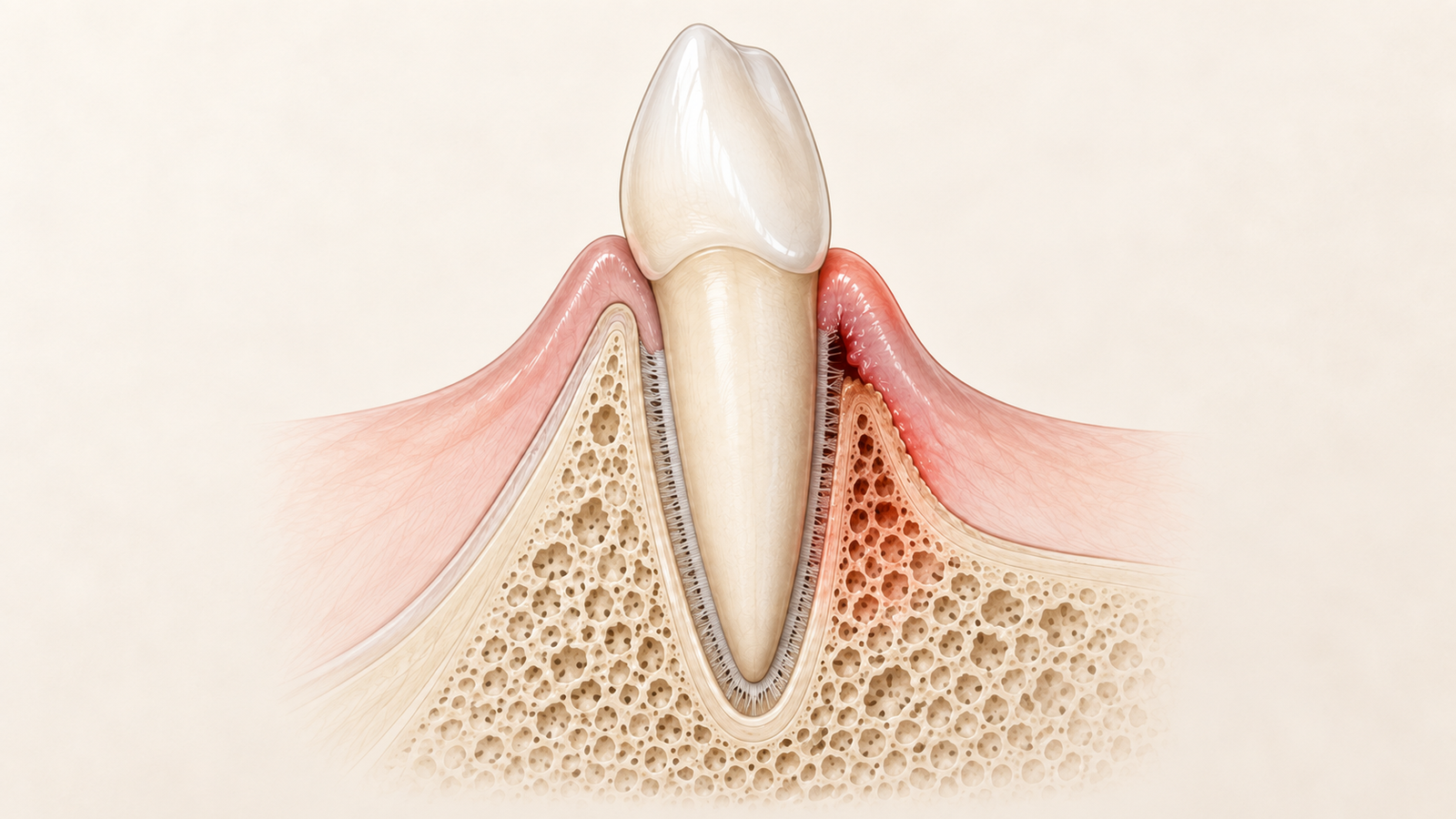
Hover over or select a point to see what the illustration shows and why it matters when orthodontic treatment is planned.
What do we assess before moving teeth?
Hover over or select a point to see what the illustration shows and why it matters when orthodontic treatment is planned.
Hover or select a point
01
Crown and tooth position
What the illustration shows
The visible part of the tooth and its position in relation to neighbouring teeth.
What we assess
Position in the arch, inclination, tooth contacts and the movement needed to reach the treatment goal.
Why it matters
A straight smile is not only about the crowns. Movement must be planned with the roots and the whole bite in mind.
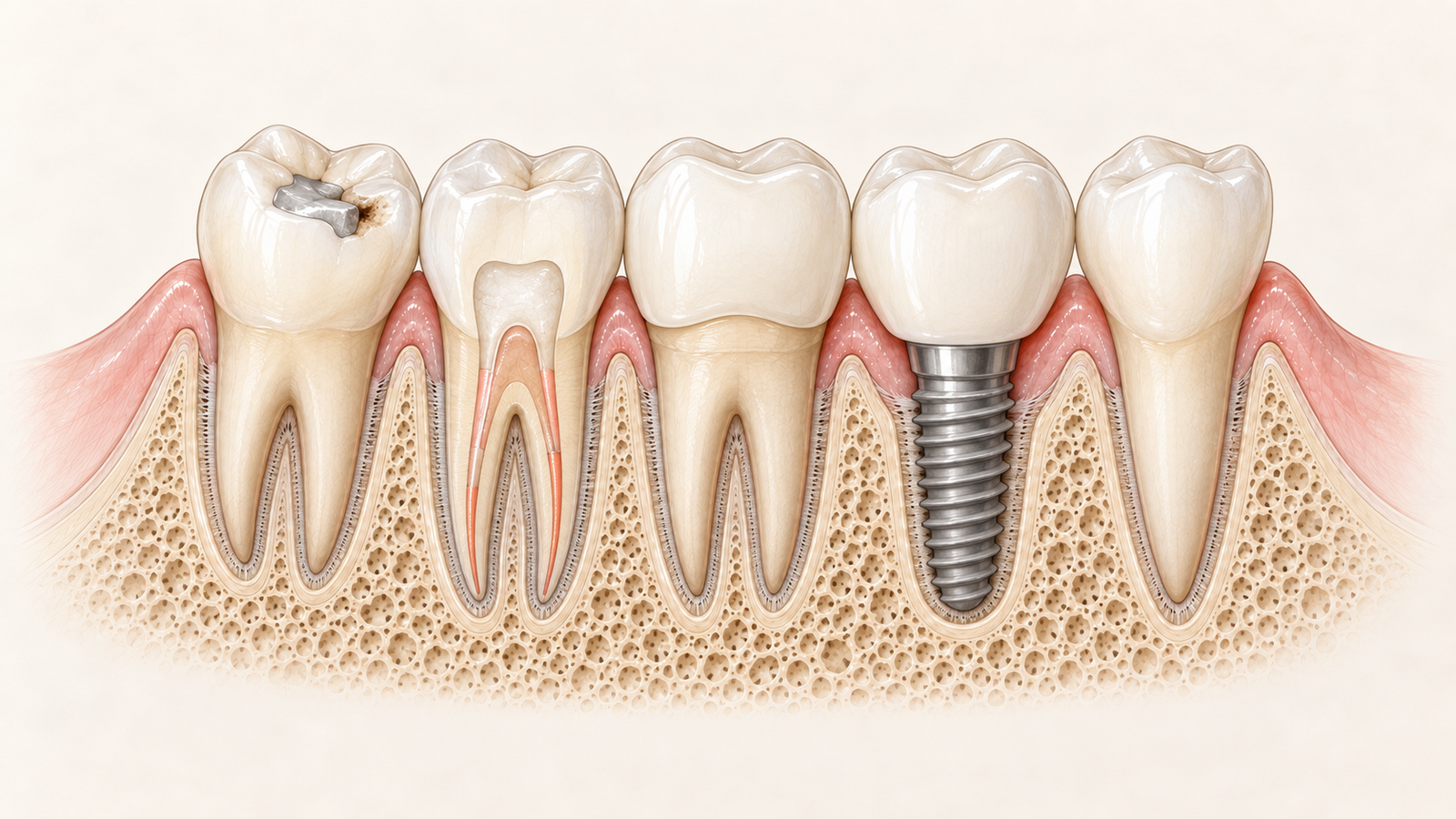
How does existing dental work affect the orthodontic plan?
We assess more than tooth alignment. Fillings, root-canal treatment, crowns and implants may change the sequence and possible movements.
Hover or select a point
01
Filling and decay
What the illustration shows
An existing filling and a change at its margin.
What we assess
Restoration seal, decay, enamel and whether hygiene can be maintained.
Why it matters
Active decay is treated before tooth movement. Orthodontic reviews do not replace dental examinations.
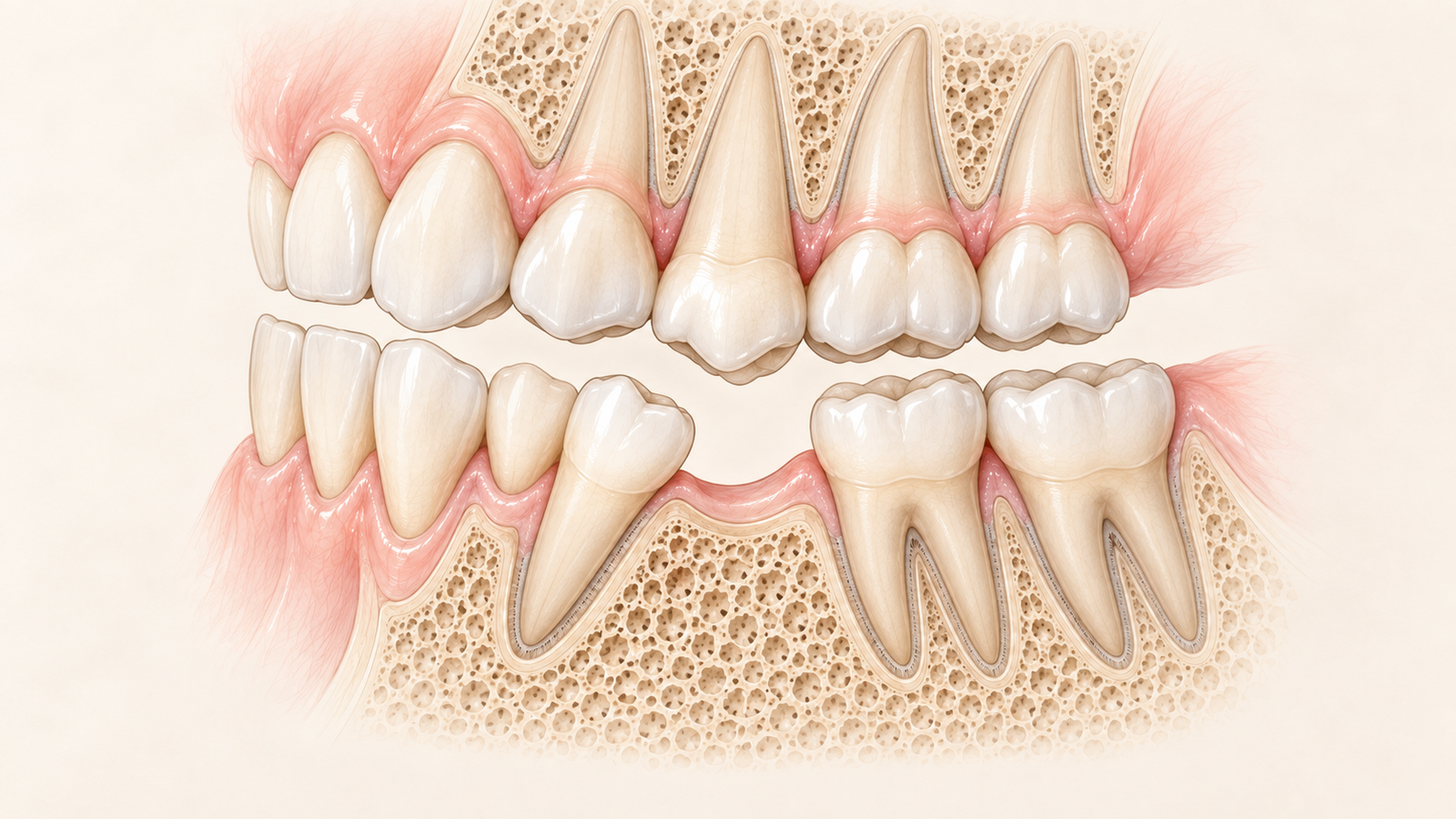
A missing tooth: close the gap or prepare the space?
The same gap can lead to different plans. We assess neighbouring teeth, the opposing arch, bone and the whole bite first.
Hover or select a point
01
Missing-tooth space
What the illustration shows
A gap in the lower arch after loss of a natural tooth.
What we assess
Its width, arch position, bite contacts and role in the overall plan.
Why it matters
The space may sometimes be closed orthodontically or prepared for restoration. Diagnosis determines the sensible options.
This illustration is educational and is not a diagnostic image. The orthodontist selects the examination and records individually.
03 / CHOOSING THE METHOD
Fixed braces or clear aligners?
Both can be used in adults, but they are not interchangeable in every case. Fixed braces work continuously and can control many complex movements. Aligners are discreet and removable, but depend on consistent wear and are not always the most predictable option.
The recommendation follows diagnosis, planned movements, periodontal condition and everyday life. Patients receive a comparison of sensible options rather than being expected to select a system before the first appointment.
Photographs, scans and imaging selected for specific questions.
03 / Plan and estimate
Goals, options, limits, stages, retention and expected costs.
04 / Active treatment
Regular reviews and decisions based on actual progress.
05 / Retention
Protecting the result and arranging long-term reviews.
05 / TREATMENT IN REAL LIFE
Work, meetings and regular reviews
Treatment must fit work, travel and the ability to maintain hygiene. A short adaptation period after fitting or adjustment is normal, so important events and longer trips should be mentioned when appointments are planned. Orthodontic reviews do not replace regular dental care.
A large, free patient car park is located directly beside the practice. For appointments that take longer than a few minutes, this avoids searching for a space or paying parking charges, including for patients travelling from Katowice and elsewhere in the region.
06 / FAQ
Key questions before deciding
This page explains the service. The guide contains the fuller discussion of age, gums, restorations and everyday treatment.
There is no single age limit. Eligibility depends on the teeth, gums and bone, general health and the treatment goal.
Can treatment prepare space for an implant or crown?
Yes. Orthodontics may close a gap or create the correct space for restoration. The sequence is coordinated with restorative or implant care.
Can I choose aligners if I do not want fixed braces?
Aligners can be considered after diagnosis. If they cannot provide enough control, fixed or combined treatment and the limits should be explained honestly.
Does consultation commit me to treatment?
No. Its purpose is diagnosis, options and an informed decision.
Do I still need a dentist during treatment?
Yes. Examinations, decay treatment and professional cleaning remain important throughout treatment.
Will I need a retainer?
Yes. Retention is part of the plan and helps limit unwanted tooth movement.
You do not need to choose an appliance first.
Begin with a discussion, examination and plan. Then we can choose a method that makes sense for your situation.