
First step · patient guide
Your first orthodontic visit — what really happens?
An initial orthodontic consultation is more than a quick look at the teeth. It is a structured process: discussing your concerns, examining the bite and oral health, selecting appropriate records, explaining realistic options and preparing an individual treatment plan with a clear cost estimate.
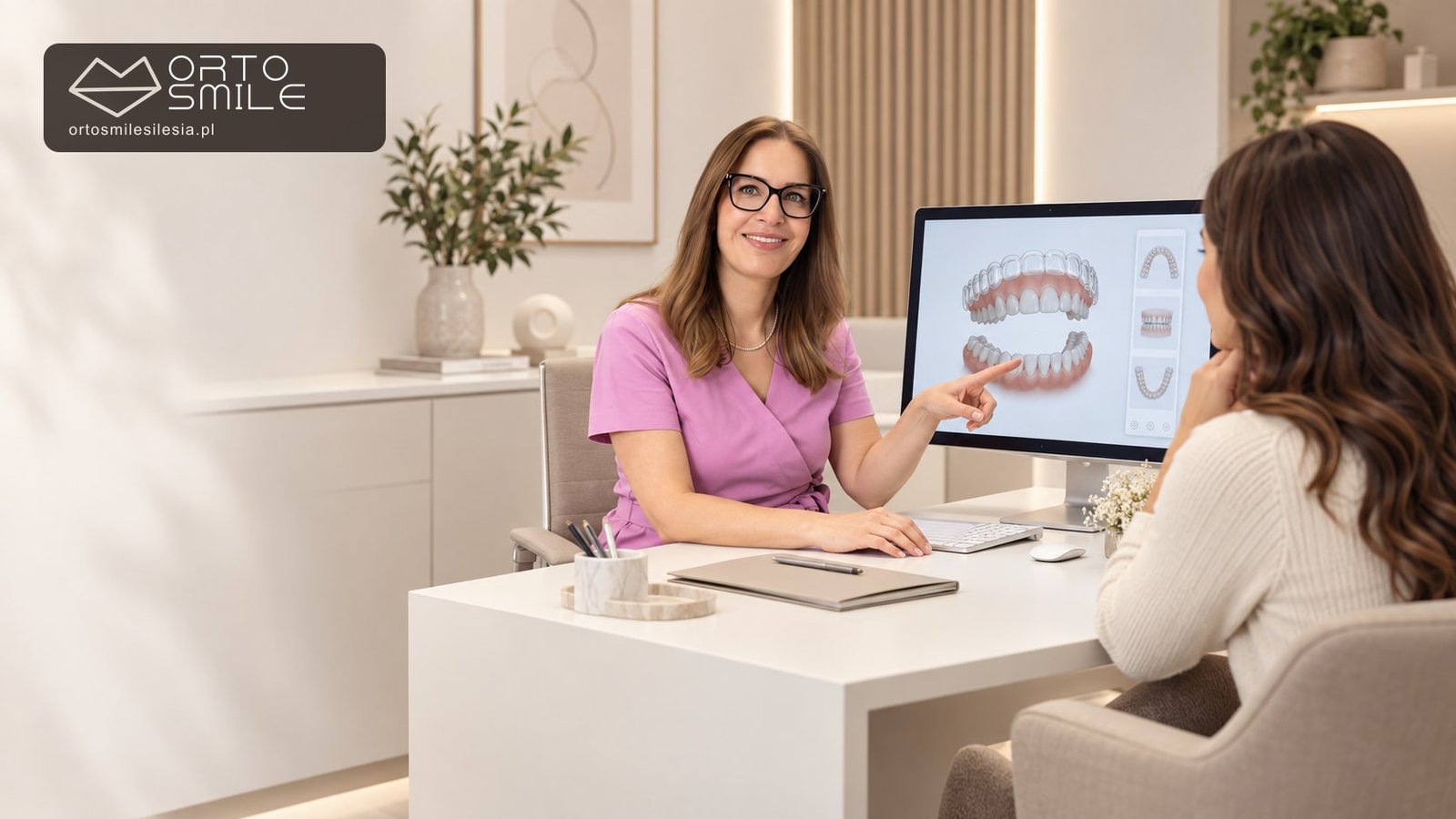
How should you prepare for the first visit?
No special preparation is required, but brushing your teeth and gathering relevant dental records makes the consultation more useful. Bring recent radiographs, previous orthodontic records and a list of medicines or health conditions if available.
Write down your questions and priorities. Function, appearance, hygiene, comfort and a discreet appliance may matter differently to each patient. An honest conversation helps create a plan that is medically sound and realistic in daily life.
Useful information to bring:
- medicines, chronic conditions, allergies and relevant procedures
- available dental and orthodontic records
- pain, clenching, jaw-joint sounds or difficulty biting
- questions about methods, duration, costs, reviews and retention
- for a child: oral breathing, habits, loss of baby teeth and previous assessments
The conversation that guides treatment
The visit begins with medical and dental history. Dr Anna Krzysztoforska asks about general health, medication, previous dental care, gum health, breathing, oral habits and past orthodontic treatment. A child’s growth, tooth development and habits are also important.
This is the time to explain what concerns you and what outcome matters. The visible issue is not always the only clinical problem, and a minor irregularity does not always require extensive treatment.
What does the orthodontist examine?
The assessment covers tooth position, space, the relationship between the jaws, bite contacts, midlines, jaw movement, soft tissues, gums, profile and smile. Oral hygiene, possible decay and restorations requiring review are also considered.
This assessment does not replace a routine examination by a general dentist. It helps establish whether the mouth is healthy enough to begin orthodontic treatment.
The assessment may include:
- tooth position and available space
- jaw relationships and bite
- asymmetry and jaw-joint function
- gums, supporting tissues, enamel and hygiene
- facial profile, proportions and smile display
Which diagnostic records may be needed?
An individual plan may require facial and dental photographs, a digital scan and selected radiographs. Together these show the bite, roots, bone, unerupted teeth and relationships that cannot be judged from appearance alone.
Records are selected according to age, examination findings and the planned treatment. Not every patient needs exactly the same imaging, and some records may be completed at a later stage.
What is included in an individual treatment plan?
After the examination and records have been analysed, the plan defines the problems, goals, proposed appliance, sequence, expected duration and follow-up. Where more than one reasonable option exists, the benefits, limitations and responsibilities are explained.
The plan also covers preparation before treatment, possible additional procedures and retention after active tooth movement.
A sound plan should explain:
- what will be corrected and why
- which methods are appropriate and what their limits are
- whether dental care, hygiene treatment or another consultation is needed first
- expected duration and review frequency
- how the result will be retained
A clear estimate of the complete treatment process
Dr Anna Krzysztoforska explains the expected cost of diagnostics, the selected method, planned reviews and stages, and retention. This allows the patient to consider the likely cost of the whole process, rather than only the fee for fitting an appliance.
A reliable estimate follows an individual plan. Complex treatment may occasionally require modification, but significant changes should be discussed before they are introduced.
Why must teeth and gums be healthy before braces?
Orthodontic treatment should begin in a healthy, stable mouth. Active decay, untreated cavities, gum inflammation or inadequate hygiene increase the risk of enamel damage, decay and periodontal problems. An appliance is therefore not fitted until the necessary dental treatment is complete and hygiene is safe.
Orto Smile does not provide general dentistry. If cavities, inflammation or other restorative problems are identified, the patient is advised to visit their general dentist. Orthodontic treatment can proceed after the mouth has been restored to health. Routine dental care must continue during orthodontic treatment.
Before treatment you may need:
- treatment of decay or defective restorations
- treatment of gum or periodontal disease
- professional cleaning and improved home care
- extractions or other procedures included in the agreed plan
- review by the dentist responsible for general dental health
What should you know after a complete consultation?
You should understand the diagnosis, whether treatment is needed now, which records remain necessary, available methods, expected stages, duration, responsibilities and costs.
The next step may be observation, dental treatment, improved hygiene or consultation with another professional. Not fitting braces immediately is often a sign of careful, safety-led planning.
- 1
Clear findings
The bite problem and treatment goals are explained in plain language.
- 2
Plan and options
Suitable methods, limitations and patient responsibilities are discussed.
- 3
Time and costs
You receive an expected schedule and plan-based estimate.
- 4
A specific next step
Complete records, dental care, observation or preparation for the appliance.
Are braces fitted at the first appointment?
Usually not. The first visit is for assessment, diagnostics and informed decision-making. Starting without complete records, a plan and confirmation of oral health would not be appropriate.
After the plan is accepted and any necessary dental treatment is complete, a separate appointment is arranged to begin the selected treatment.
Which questions are worth asking?
A good consultation allows time for questions. You do not need technical vocabulary; the clinician should explain the plan clearly.
Consider asking:
- what is the main treatment goal
- which options are available and what are their benefits, limits and risks
- what must be completed before treatment
- how long treatment may take and what could change that estimate
- what the cost estimate includes
- how often reviews occur and what to do after a breakage
- how hygiene, diet and retention will work
Common questions about the first visit
How long does the first consultation take?
It depends on the assessment and records required. Allow enough time for history, examination, discussion and questions.
Do I need a referral?
A referral is usually not required for a private consultation. Bring any records you already have.
Will X-rays be taken?
They may be needed, but the type and timing depend on the examination and clinical indications.
Should a parent attend a child’s visit?
Yes. A parent or guardian provides health information and participates in treatment decisions.
Can I attend with decay or toothache?
An assessment is possible, but no appliance is fitted until active problems are treated. Orto Smile will refer you to a general dentist because it does not provide general dentistry.
Will I know the total cost?
After necessary records and planning, you receive an estimate covering the expected stages. The final scope depends on the individual case.
Must I decide immediately?
No. You should have time to understand the proposal and make an informed decision.
Does every visit end with qualification for braces?
No. Observation, dental care, improved hygiene or another consultation may be the correct next step.
- British Orthodontic Society — Everything you need to know before having your teeth straightened
- British Orthodontic Society — Your first visit to the orthodontist
- American Association of Orthodontists — What Happens at Your First Orthodontic Appointment?
- NHS — Braces and orthodontics
- Nottingham University Hospitals — Orthodontic oral hygiene